Guides / Design for Manufacture
Perforated Headphone Grilles: Etched, Punched or Machined Compared
November 3, 2026
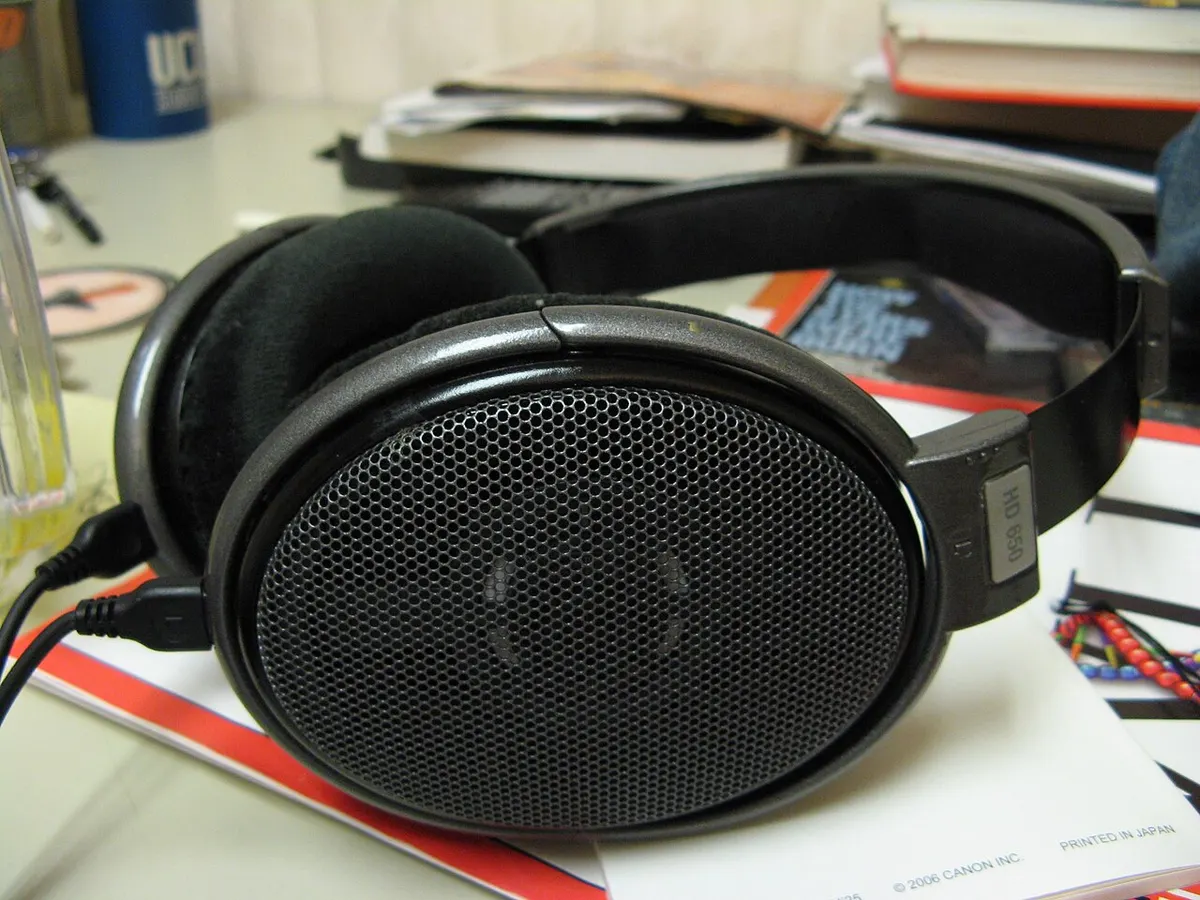
Perforated headphone grilles are made three ways: photochemical etching, punching and CNC machining. Etching suits thin sheet and fine patterns with clean edges, punching suits larger holes in repeat volume, and machining suits thick plate or special hole shapes. The right one follows from hole size against sheet thickness, how many grilles there are and how the edge is looked at.
The listening result belongs to the brand’s acoustic design. This guide covers the manufacturing side: the size rules, open area, burrs and the checks to put in the RFQ. Related parts: headphone cup and yoke manufacturing and microphone body and grille machining.
Where the grille sits
Open-back headphones have the back of the earcup open, which leaks more sound and lets in more ambient sound but gives a more natural, speaker-like sound, according to the reference page. On those designs the grille is the visible face of the product, so the hole pattern, the edge and the finish are all looked at. A closed-back cup hides most of this. That is why the grille is a cosmetic specification as much as a dimensional one, in line with specifying cosmetic faces on a drawing.
The three processes
| Photochemical etching | Punching | CNC machining | |
|---|---|---|---|
| How holes are made | Resist printed on both sides, acid removes the exposed metal | Punch and die press through the sheet | End mill or drill cuts each hole |
| Thickness range | 0.013 to 2.032 mm, thin gauges most typical | Sheet gauges, thin up to a few mm | Thick plate and billet |
| Burrs | Burr-free and stress-free edges (supplier claim) | Burr on the bottom, about 10% of thickness | Burr on exit, needs deburring |
| Hole count effect | Little: all holes etch at once | Cycle time follows the number of hits | Time rises with every hole |
| Tooling | Film phototool, quick to make | Punch tools, or a turret press with up to 60 tools | Program only |
| Edge | Curved edge with a cusp of 10 to 20% of thickness | Burnished top, tapered wall | Straight wall, can be chamfered |
| Best for | Fine patterns in thin sheet | Larger holes, high volume | Thick or domed parts, special holes |
Process details come from the photochemical machining reference, a precision etcher’s guidelines, a stamping design guide and the sheet metal reference. Edge and burr claims for etching are supplier statements, not independent test data.
Minimum hole and web, by process
Sheet that is too thin for the hole is what makes grilles fail. The rules are ratios to the sheet thickness t, and they differ by process. Using 0.5 mm stainless as an example:
| Process | Minimum hole | Minimum web between holes | Pitch | Open area, 60° staggered |
|---|---|---|---|---|
| Etched | 1.0 t = 0.5 mm | 0.75 t = 0.375 mm | 0.875 mm | 29.6% |
| Punched, fully guided tooling | 1.0 t = 0.5 mm | 2.0 t = 1.0 mm | 1.5 mm | 10.1% |
| Punched, unguided tooling | 2.0 t = 1.0 mm | 2.0 t = 1.0 mm | 2.0 mm | 22.7% |
Sources: the etcher lists minimum hole and slot at 100% of metal thickness and a minimum land of 75% for 0.25 to 2.5 mm material. The tooling maker lists minimum punch diameter to thickness for stainless of 2 to 1 unguided and 1 to 1 fully guided, with 2 times thickness between holes and from hole to edge (punching guide). The stamping guide gives 1.2 times thickness for aluminum and 2 times for stainless. Vendors disagree, so treat the table as a first screen and ask the shop for its own limits.
The open area column is geometry. For round holes of diameter d on a 60° staggered pitch p, open area is π divided by 2√3 times (d/p)², about 0.907 (d/p)². Because the minimum hole and web scale with the sheet thickness, thinner sheet allows a finer and more open pattern. Whether a given open area is acoustically right is the brand’s call, not the shop’s.
Tolerance, burrs and edge
- Etched. The etcher quotes plus and minus 10% of thickness for 0.25 to 2.5 mm material, with a floor of plus and minus 0.025 mm. On 0.5 mm sheet that is plus and minus 0.05 mm on hole size. The curved edge profile means the hole is slightly larger on the etch side, so say which face the customer sees.
- Punched. The wall is burnished on the top face and tapers toward the bottom, where the burr forms. One guide puts the burr at about 10% of the thickness, and says straightening the wall needs secondary machining. Put the burr side toward the inside of the cup, state a burr height limit and ask how it is removed. A tumbled finish helps, see vibratory finishing for small audio hardware.
- Machined. Edges can be chamfered and holes can have shapes the other two cannot make. The cost is time per hole. A 50 mm round grille at 1.5 mm pitch is about 1,000 holes, and at 1.0 mm pitch about 2,300, per earcup, two earcups per pair.
Material, forming and finish
- Material. Etching covers virtually any commercial alloy, including stainless, aluminum, copper and titanium. Stainless and aluminum are the common choices, and aluminum is picked when the finish is anodized. For the grade question see 303 and 304 stainless for audio parts and titanium audio parts.
- Domed or curved grilles. If the grille is domed, say whether holes are made flat and the sheet then formed, or formed first. Forming after perforation stretches the holes and the pattern, so draw the holes as they must look on the finished part and ask the shop to prove it on a sample.
- Finish. Aluminum grilles are usually anodized, and the coating changes hole size: anodizing grows half the thickness on each surface, as in anodizing colour match for hi-fi parts. On a fine pattern with a 1 mm hole a 10 µm coat shrinks the hole by 10 µm, since the wall grows 5 µm on each side. Say whether hole size is before or after coating. Bead blast or brush after perforation can round hole edges, see bead blasting audio enclosures.
- Flatness. Thin perforated sheet can bow. Ask the shop for a flatness limit and how the sheet is flattened.
Which process, by situation
- Thin sheet, 0.1 to 0.5 mm, hole 0.3 to 1 mm: etching. Punching cannot reach the ratio.
- Sheet 0.8 to 1.5 mm, hole 2 mm or more, thousands of units: punching, if the burr side is acceptable.
- Plate over 2 mm, a hole shape that is not round, a chamfered edge or a domed part: machining.
- A few hundred units, undecided: quote two processes on the same drawing. Etching tooling is a film, so the setup cost is low.
What to put in the RFQ
- STEP or DXF of the pattern and a 2D drawing with hole diameter, pitch, pattern angle and edge margin
- Sheet material, grade and thickness, and whether the sheet is flat or formed
- Visible face and burr side, and a burr height limit
- Hole tolerance and a flatness limit
- Finish and whether hole size is before or after coating
- Open area target, if the brand has one, so the shop can check the pattern
- Quantity per run and annual volume, see MOQ and lead time
- First article with measured hole size and photos of the visible face, see first article inspection
Send the drawing through the RFQ form and we match it with up to 3 shops that etch, punch or machine perforated parts, with a reply within 24 business hours.
Sources
- Headphones, Wikipedia
- Photochemical machining, Wikipedia
- Chemical etching technical guidelines, Precision Micro
- Metal stamping design standards, Xometry
- Punching holes, Mate Precision Tooling
- Sheet metal, Wikipedia
- Anodizing, Wikipedia
See also: headphone and IEM parts, with the pair matching rule.
Frequently asked questions
How are perforated headphone grilles made?
Three ways. Photochemical etching removes metal through a printed resist, so every hole is made at once and edges are burr-free. Punching presses a punch through the sheet, which is fast for a repeat pattern but leaves a burr on one side. CNC machining mills or drills each hole in a thicker plate, which gives the most freedom in shape and edge but takes the longest.
What is the smallest hole in a stainless grille?
It depends on the process and the thickness. One etcher sets the minimum hole at 100% of the metal thickness, so 0.5 mm stainless allows a 0.5 mm hole. A punching tool maker gives 2 times thickness for stainless with unguided tooling and 1 times with fully guided tooling. Confirm with the shop that will make it.
How do I work out the open area of a grille?
For round holes in a staggered 60 degree pattern, open area is 0.907 times the square of the hole diameter divided by the pitch. A 0.5 mm hole on a 0.875 mm pitch gives about 29.6%. That is geometry, not acoustics, so the brand sets the target from its listening tests.
Which side should the burr face on a punched grille?
The punched wall is burnished on the top face and breaks away on the bottom, where the burr forms, about 10% of the material thickness in one tooling maker's guide. Put the burr side inside the earcup, away from the skin and the eye, and state the burr direction and height limit on the drawing.
Need a quote for this part?
Send the drawing. We match you with up to 3 shops and reply within 24 business hours.
Get matched with an audio parts shop