Guides / Design for Manufacture
Lead in Brass Audio Parts: RoHS, Prop 65 and Lead-Free Brass Swaps
November 7, 2026
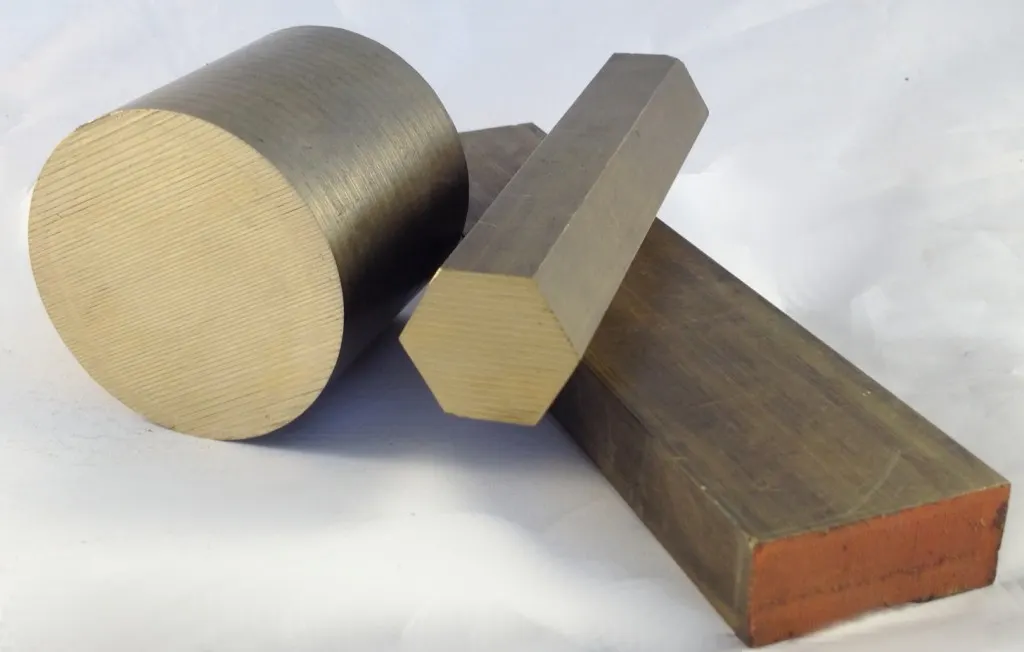
Free-cutting brass, C36000, is the usual bar stock for knobs, feet and threaded audio hardware, and copper.org lists its lead at 2.5 to 3.0%. Several rules care about that number. The EU RoHS limit is 0.1% lead by weight in a homogeneous material, so a leaded brass part depends on an exemption that is listed to run out on 30 June 2027. California’s Prop 65 works on dose, and US children’s products have a 100 ppm limit. If your product sells in those markets, decide the alloy before the RFQ, not after the first article.
This is a manufacturing guide, not legal advice. Dates and limits below are as of October 2026, so confirm them with your compliance lab or customs broker. For the finishing side of brass see brass and copper audio parts.
Which rule applies to which product
| Rule | Where | The number | What it asks |
|---|---|---|---|
| RoHS, Directive 2011/65/EU | EU | Lead 0.1% by weight in homogeneous materials | Finished electrical and electronic equipment must stay under it, unless an exemption applies |
| RoHS Annex III exemption 6(c) | EU | Copper alloy up to 4% lead | Lets leaded brass stay in, with an end date and a condition |
| Proposition 65 | California | Lead 0.5 micrograms per day (reproductive toxicity) | A warning, unless exposure is at or below the level |
| Children’s products, CPSC | US | 100 ppm total lead in accessible components | Applies to children’s products |
Convert units once so the table reads the same way: 0.1% is 1,000 ppm, 100 ppm is 0.01%, and C36000 at 2.5 to 3.0% is 25,000 to 30,000 ppm. A leaded brass knob is therefore about 25 times over the RoHS general limit and hundreds of times over the children’s limit.
Most hi-fi brands sit in the first two rows. A brand selling children’s headphones also sits in the last.
How much lead is in the usual brass
| Alloy | Copper | Lead | Other | Use |
|---|---|---|---|---|
| C36000 free-cutting brass | 60.0 to 63.0% | 2.5 to 3.0% | Zinc balance, iron 0.35% max | Knobs, feet, terminals, threaded parts |
| C69300 ECO brass (silicon brass) | 73.0 to 77.0% | 0.04 to 0.09% | Silicon 2.7 to 3.4% | Lead-free replacement for turned parts |
Both figures are copper.org composition limits. C69300 at 0.09% maximum sits just under the 0.1% RoHS figure.
Lead is in brass for one reason: it makes chips short and breaks them. One metallurgical reference notes that cutting can smear lead across the surface and that significant lead can leach even from brasses with fairly low lead content. For a part that is held and touched every day, that is the point regulators keep returning to.
Aluminum is a different case. The 6061 composition limits list no lead as an alloying element, with other elements capped at 0.05% each, so a 6061 knob or panel does not raise the question. Annex III also has entries for machining steel (0.35% lead) and machining aluminium (0.4%), which matter if you buy alloys other than 6061.
The exemption has an end date and a catch
RoHS Annex III exemption 6(c) lets a copper alloy contain up to 4% lead. Directive (EU) 2025/2364, which Member States had to transpose by 30 June 2026 and apply from 1 July 2026, rewrote the lead entries. Reading the text on EUR-Lex:
- 6(c), copper alloy up to 4% lead: expires 30 June 2027.
- 6(b)-II, aluminium for machining up to 0.4% lead: expires 11 June 2027 for most equipment categories.
- 6(a)-I, steel for machining up to 0.35% lead: expires 30 June 2027.
Exemption dates can move when a renewal request is filed or decided. Treat 30 June 2027 as the planning date and check the Official Journal for any later notice before a long production run.
The catch sits in a footnote. The exemption does not cover equipment supplied to the general public where the equipment or an accessible part may be placed in the mouth by children, unless lead release is no more than 0.05 micrograms per square centimetre per hour. The text treats an item under 5 cm in any dimension, or with a detachable or protruding part that size, as mouth-placeable. A 35 mm brass knob on a consumer product is under that size. Ask your lab how the clause applies to your product before you lean on 6(c).
Swapping to a lead-free brass
A silicon brass such as C69300 meets the 0.1% figure on paper. What changes for the part:
- Machining. Silicon brass is harder on tools than C36000. Published machinability ratings for C69300 differ between sources, so there is no number to trust. Ask the shop to quote both alloys on the same drawing and tell you the cycle time difference.
- Colour and polish. Copper content is 73 to 77% against 60 to 63%, so the colour and the way it polishes differ. Approve a finished sample, see mirror polishing aluminum and brass.
- Threads and fine detail. Chip behaviour changes, so check burrs on threads and knurls at the first article, see first article inspection.
- Coating. A plated or lacquered finish is a separate route. PVD on brass needs a nickel or chrome layer first, see PVD coating for audio knobs.
- Cost. No public price comparison exists for the two alloys on audio parts. Get the bar price and the machining time from the quote.
If a part does not need to be brass, a change of material is the cleanest answer. Aluminum alloys for anodized audio parts covers the colour options, and 303 vs 304 stainless covers the heavy alternative.
Prop 65 and the children’s limit
Prop 65. The regulation lists lead at 0.5 micrograms per day for reproductive toxicity (27 CCR section 25805). The law turns on the dose from using the product, not on a percentage in the alloy. A brand decides between testing the finished part and adding a warning, with advice from its own counsel.
Children’s products. CPSC guidance sets 100 ppm total lead content for accessible components of children’s products, and its pages tie the rules to products designed or intended primarily for children 12 years of age or younger. A brand that sells children’s headphones should treat leaded brass as out and ask a test lab how “accessible” applies to its design.
What to ask the shop
- Which alloy and bar lot the part is cut from, and a mill certificate with chemistry
- Whether leaded and lead-free bar are kept apart on the floor, so chips and coolant do not cross
- A written statement of the lead content for the delivered part, matched to the lot
- Whether the shop can take a third-party test report if your compliance lab asks for one
- Cycle time and price for both alloys on the same drawing
What to put in the RFQ
- Drawing with the alloy named, or “lead-free brass, lead max 0.1%, alternatives allowed” if you want the shop to propose one
- Markets the product ships to, so the shop knows which limit applies
- Finish and pre-finish, with colour approved on a sample from the chosen alloy
- Quantity per run and annual volume, see MOQ and lead time
- Certification package you need delivered with each lot
Send the drawing through the RFQ form and we match it with up to 3 shops that cut brass and aluminum audio parts, with a reply within 24 business hours.
See also brass bar specifications for audio hardware: ASTM B16, B453 and lead-free bar.
Sources
- Directive 2011/65/EU (RoHS), EUR-Lex
- Directive (EU) 2025/2364, EUR-Lex
- C36000 free-cutting brass, Copper Development Association
- C69300 ECO brass, Copper Development Association
- 27 CCR 25805, Proposition 65 safe harbor levels
- Total lead content, CPSC
- Brass, Wikipedia
- 6061 aluminium alloy, Wikipedia
See also: RoHS, REACH and Prop 65 for audio parts side by side.
Frequently asked questions
Can a brass knob be RoHS compliant?
Yes, in two ways. The part can stay under 0.1% lead by weight in the homogeneous material, which needs a lead-free brass, or it can use the Annex III exemption 6(c) for copper alloy up to 4% lead. Under Directive (EU) 2025/2364 that exemption is listed to 30 June 2027 and has a condition on mouth-placeable consumer products, so confirm it with your compliance lab.
How much lead is in free-cutting brass C36000?
Copper.org lists C36000 at 2.5 to 3.0% lead, with copper at 60.0 to 63.0%. Lead is added so the bar machines in short chips. That is 25,000 to 30,000 ppm, far above the 0.1% (1,000 ppm) RoHS limit and the 100 ppm limit for children's products, which is why the part depends on an exemption or a swap.
What brass replaces C36000 in audio parts?
A silicon brass such as C69300. Copper.org lists it at 73.0 to 77.0% copper, 2.7 to 3.4% silicon and 0.04 to 0.09% lead. That sits under the 0.1% RoHS figure. It is not a drop-in swap, since published machinability ratings differ between sources, so quote both alloys on the same drawing and approve a sample.
Does Proposition 65 ban lead in brass audio parts?
No. Prop 65 is a warning law built on dose, not an alloy ban. The regulation lists lead at 0.5 micrograms per day for reproductive toxicity. Whether a knob needs a warning depends on how much lead a user could be exposed to by handling it, so brands usually take advice and test the finished part.
Need a quote for this part?
Send the drawing. We match you with up to 3 shops and reply within 24 business hours.
Get matched with an audio parts shop