Guides / Design for Manufacture
Machining In-Ear Monitor Shells in Aluminum, Titanium or Zirconia
October 29, 2026
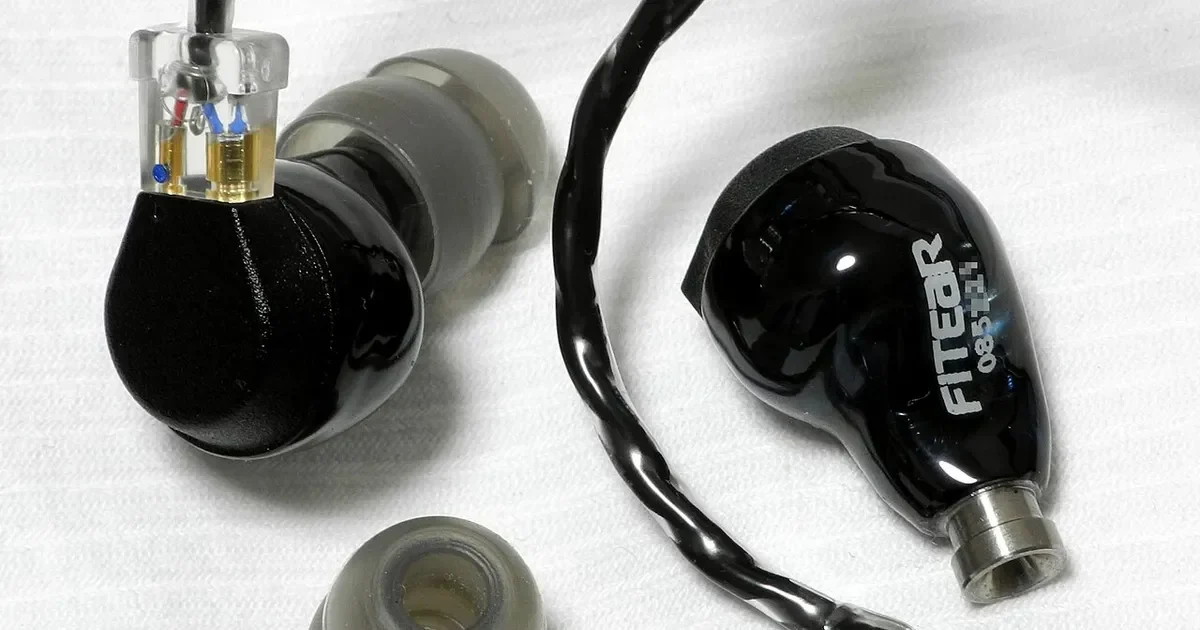
A machined IEM shell is usually made from 6061 aluminum, Ti-6Al-4V titanium or sintered zirconia ceramic, and that choice sets weight, finish route and price more than the geometry does. Aluminum is the cost and finish baseline. Titanium is heavier and slower to cut. Zirconia is not machined like the other two at all, because the ceramic has to be sintered and it shrinks while it does.
This guide covers what a machined shell is, how the three materials compare, which dimensions need a tolerance and what to send in the RFQ.
What a machined shell is, and what it is not
A custom in-ear monitor is molded to one person’s ear. Wikipedia’s in-ear monitor article describes custom units as shaped from an ear impression, and its photo of a custom shell is captioned as hard acrylic. That route follows the ear, so every shell is different and none of it is CNC work.
A machined shell is the other kind: a universal design with one fixed geometry, sold to everyone and sealed with foam or silicone tips. Because the shape does not change, it can be programmed once and repeated, which is where CNC pays off. Most designs split into a body, a faceplate and a nozzle, though the exact split is a design decision. Every split adds a seam, and every seam is a visible line.
Aluminum, titanium or zirconia
| 6061 aluminum | Ti-6Al-4V titanium | Zirconia (3Y) | |
|---|---|---|---|
| Density | 2.70 g/cm³ | 4.429 to 4.512 g/cm³ | 5.68 g/cm³ |
| Weight of a 2 cm³ solid body | 5.4 g | 8.9 g | 11.4 g |
| How it is shaped | Milled and turned, fast | Milled and turned, slow | Cut presintered, then sintered, or ground fully dense |
| Colour comes from | Dyed anodize coat | Oxide thickness (voltage) | The ceramic itself |
| Main risk | Colour repeat | Tool wear and cycle time | Shrinkage and chipping |
Densities come from the 6061, Ti-6Al-4V and zirconium dioxide reference pages. The weight row is arithmetic on a 2 cm³ solid body. Real shells are hollow and a thin wall weighs far less, so use it only to compare the materials against each other.
Aluminum. It is the easiest to cut and the easiest to colour. The honest limit is that dye batches drift, which is the subject of getting anodize colour to repeat.
Titanium. Ti-6Al-4V conducts heat poorly, 6.7 to 7.5 W/m·K at room temperature, and the reference page links that low conductivity to its poor machinability. Heat stays at the cutting edge, tools wear faster and cycle time rises. For a part this small the metal cost is minor and the machining time is the price. More on the alloy in titanium audio parts.
Zirconia. Yttria-stabilized zirconia (3Y) keeps a tougher tetragonal phase at room temperature, which is why it is the common ceramic for watch cases and similar parts. A published study of pressed zirconia found two routes. Fully sintered blocks can be milled to final size, but long milling times and fast tool wear follow. Presintered blocks cut quickly, then must be sintered, and the linear shrinkage in that study was 18.6% to 23.2%. The shell is cut oversize by the supplier’s factor for that blank. If the shop is a general machine shop with no ceramic experience, this is the material to ask about first.
Dimensions that need a tolerance
A shell has few features, and each one is acoustic or cosmetic.
- Nozzle outer diameter and lip. The tip seats on the nozzle, so its diameter and lip decide whether tips stay on and seal. Dimension it after finishing.
- Sound bore. The inside diameter and depth of the bore are part of the acoustic design. Take the figures from the designer and list them as controlled dimensions, as in headphone cups.
- Vent hole. A passive vent is a small hole drilled into the shell, as the in-ear monitor article notes for ambient designs. Specify its diameter, and deburr it, because a burr at that size changes the opening.
- Faceplate seam. The gap and the step between plate and body are a stack of several tolerances, covered in panel gaps and tolerance stacks. Fewer parts means fewer seams.
- Connector pocket. Whatever carries the cable connector needs a pocket with a depth and position tolerance, plus a datum scheme from drawing callouts for cosmetic faces.
Need a quote for this part? Get a quote for your audio parts
Finish changes the size
On aluminum, a Type II coat grows half into the metal and half outward, so each surface gains half the coat thickness. A 10 µm coat adds 5 µm per surface, so a nozzle grows 10 µm in diameter and a vent bore shrinks 10 µm. On a tip-seating surface that matters. State whether each size applies before or after anodizing. The thickness range for Type II under MIL-A-8625 is 1.8 to 25 µm, per the anodizing reference page, and the same page notes that reds and blues are prone to fading while black and gold are more lightfast. White cannot be dyed. Threads in a faceplate screw hole need masking or inserts, covered in threads in anodized chassis.
On titanium the colour is an interference effect. The oxide layer runs from about 30 nm to several µm, the voltage sets the thickness and the colour changes with viewing angle. That makes titanium colour hard to judge by eye on a glossy small part, so agree one viewing angle and one limit sample. The same page lists AMS 2488 Type III as the colour-producing route.
On zirconia the colour is in the material and nothing is coated, so the finish is a polish. Ask the shop at which stage the polishing is done, before or after sintering, and who owns the shrinkage.
Small parts, pairs and handling
An IEM set is a pair, and the two shells sit next to each other in a photo. Treat them as one unit: same bar lot, same finishing load, inspected side by side, shipped together. The reasoning is in headphone cup and yoke manufacturing. Small hardware also benefits from mass finishing, covered in vibratory finishing for small audio hardware, but media can round a fine nozzle lip or a vent edge, so say which edges must stay sharp. Inspect under controlled light, as described in cosmetic inspection lighting and viewing distance. Pack each pair in its own sleeve, per packing finished audio parts.
What to put in the RFQ
- 3D model (STEP) and a 2D drawing with the nozzle, bore and vent dimensions called out
- Material and grade: 6061, Ti-6Al-4V or a named zirconia grade, and who supplies the ceramic blank
- Whether sizes apply before or after finishing
- Finish: anodize colour and type, titanium colour with a viewing angle, or ceramic polish level
- Which faces are cosmetic and which edges stay sharp
- Pair matching rule and packing rule
- Quantity per run and yearly volume. MOQ and lead time differ a lot between aluminum, titanium and ceramic.
Send the drawing through the RFQ form and we reply within 24 business hours with one itemised quote for the finished parts. Work goes to partner shops that fit the material.
Sources
- In-ear monitor, Wikipedia
- 6061 aluminium alloy, Wikipedia
- Ti-6Al-4V, Wikipedia
- Zirconium dioxide, Wikipedia
- Anodizing, Wikipedia
- Sintering behavior and mechanical properties of zirconia compacts, J Adv Prosthodont 2010
See also: headphone and IEM parts, with the pair matching rule.
Frequently asked questions
Are machined metal IEM shells better than molded acrylic ones?
Not by default. Custom-molded shells are usually hard acrylic because the material follows an ear impression. Machined metal suits a fixed, universal shape where look, feel and repeatable geometry matter. Choose metal for those reasons and judge the sound on the acoustic design, not on the shell material.
How much does zirconia shrink when it is sintered?
One published study of pressed zirconia compacts measured 18.6% to 23.2% linear shrinkage, and higher presintered density gave lower shrinkage. Treat that as a range, not a design value. The ceramic supplier gives the factor for its own blank and lot, and the shell has to be cut oversize by that factor.
Can a titanium shell be coloured without dye?
Yes. Titanium colour comes from the thickness of the oxide layer, which the anodizing voltage sets, not from a dye. The colour shifts with viewing angle, so agree a viewing angle and a limit sample before the run, and judge every part against that sample.
Does anodizing change the size of a vent hole?
Yes. A Type II coat grows half into the metal and half outward, so each surface gains half the coat thickness. A 10 µm coat adds 5 µm to every surface and shrinks a vent bore by 10 µm in diameter. Say on the drawing whether sizes apply before or after finishing.
Need a quote for this part?
Send the drawing. We quote the finished parts, place the work with a partner shop and reply within 24 business hours.
Get a quote for your audio parts