Guides / Design for Manufacture
Turntable Plinth Machining: Choosing Aluminum, Acrylic or a Layered Build
November 1, 2026
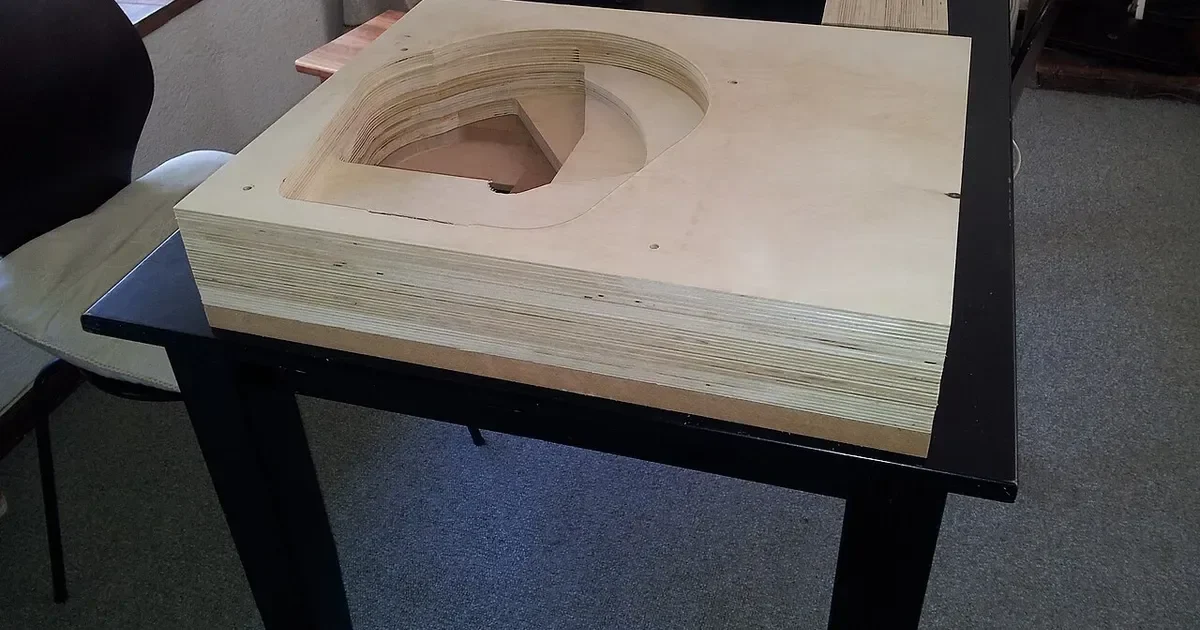
A turntable plinth carries the motor, the platter bearing and the tonearm, so it has to be flat, stiff and heavy enough to stay out of the way. It is machined from aluminum, cast acrylic or stacked wood, and each material brings a different risk to the shop: size and finish for aluminum, cracking and heat for acrylic, flatness and fastening for layered wood.
This guide compares the three, covers the features that need tolerances and lists what to send in the RFQ. For the platter itself see turntable platter machining.
What the plinth has to do
The reference page on phonographs notes that the tonearm should not resonate with vibrations from the stylus, the motor or the plinth, so it has to be heavy enough to be immune or damped to absorb them. The article on rumble adds that a heavier turntable acts as a mechanical damper, that a heavier platter helps, and that the tonearm resonance typically falls at 10 to 30 Hz. Mass and damping both reduce what reaches the stylus. The plinth supplies some of each, and the brand’s designer chooses how.
Aluminum, acrylic or layered wood
| 6061 aluminum | Cast acrylic (PMMA) | Layered birch ply or MDF | |
|---|---|---|---|
| Density | 2.70 g/cm³ | 1.18 g/cm³ | MDF 500 to 1,000 kg/m³, birch ply about 680 kg/m³ |
| Weight, 450 x 360 x 50 mm solid | 21.9 kg | 9.6 kg | MDF 4.9 to 6.5 kg (600 to 800 kg/m³) |
| Expansion per 10 K over 450 mm | 0.10 mm | 0.23 to 0.45 mm | Not compared here |
| Main risk | Large plate flatness, size limits at the anodizer | Heat, cracking, scratches | Flatness, screws in edges |
| Visible finish | Anodize, blast, brush | Polished or frosted edges | Veneer, paint, oil |
Figures come from the 6061, PMMA, MDF and plywood reference pages and the thermal expansion table. The weights are the density times the volume of a solid block and are an illustration only, because real plinths are pocketed. The acrylic expansion uses the coefficient quoted for PMMA, (5 to 10) × 10⁻⁵ per °C, and aluminum uses 23.1 × 10⁻⁶ per K.
Aluminum. It adds mass in a small footprint and takes a good anodized finish. A plate this size is heavy to handle and needs a large anodizing tank, so ask the maximum part size before quoting, as in machining thick aluminum front panels. A pocketed plinth turns most of the block into chips, which is why cost rises quickly with thickness, see amplifier chassis cost, line by line.
Acrylic. It is light, and the damping reference page notes that metals, ceramics and glass have very light material damping while polymers damp much more. Use cast sheet: reference sources say cast acrylic is preferred for turning, milling and drilling, while extruded acrylic melts and clogs cutting tools. It scratches more easily than glass, and polishing or heating the surface can remove scratches. Absorption of water is 0.3 to 0.4% by weight. See acrylic and polycarbonate in audio panels for the thinner sheet case.
Layered wood. Stacking plies and bonding them gives a thick plinth from thin sheet, and cross-grain layering reduces thickness swelling and shrinkage. Baltic birch has a void-free core. The ply stack in the photo above was cut layer by layer, with the pocket stepped through each layer. MDF is machined with carbide tools, because high-speed steel dulls quickly, and screws hold poorly in its edges, so use inserts or through-bolts. A layered build is more a woodworking job than a CNC machine shop job, so check that the shop does it.
Some designs stack aluminum plates with a damping layer between them. Whether that sounds better is for the designer. For the shop it means flat mating faces and a repeatable bolt pattern.
Features that need a tolerance
- Bearing seat. The platter bearing sits in a bore. Concentricity with the motor position and squareness to the top face matter more than the diameter alone.
- Tonearm mounting. The tonearm pivot hole and its distance from the spindle come from the tonearm maker’s template. Take them from the template, not from a photograph, and call out the position with a tight tolerance relative to the bearing datum.
- Motor pocket. Depth and position, plus clearance for the belt path, if it is belt drive.
- Foot positions. Holes for the feet or isolation cones, see isolation feet, cones and spikes. The mounting faces must be coplanar so the plinth does not rock.
- Top face flatness. The platter and tonearm both reference the top face, so give it a flatness callout and have it measured.
General datum practice is in drawing callouts for cosmetic faces, and combined tolerances in tolerance stacks for audio products.
Need a quote for this part? Get a quote for your audio parts
Thermal movement and fixing
Across 450 mm, a 10 K change moves aluminum by 0.10 mm and acrylic by 0.23 to 0.45 mm, using the coefficients above. If an acrylic top is bolted to an aluminum sub-chassis, the two will not move together, so use slotted or oversize holes in one of them. A tight hole on a cold acrylic plate that warms up is how a crack starts.
Finishing and handling
- Aluminum: anodize growth is half into the metal and half outward, so a 10 µm coat adds 5 µm to each surface. For a bearing bore that is a 10 µm change in diameter, so say whether the bore size is before or after finishing. See anodizing colour match and brushed finish audio panels.
- Acrylic: edges can be polished and scratches can be removed by polishing, so ask for a polished or a deliberately frosted edge and agree a limit sample. Do not use solvent cleaners. Laser-cut edges leave internal stress and cause stress-crazing, so anneal before bonding.
- Wood: seal all faces and edges, since moisture moves MDF if it is unsealed.
Inspect the first plinth before the run, per first article inspection, and pack it with edge protection, see packing finished audio parts.
Cost, weight and shipping
Three lines move the price of a plinth. The first is stock: a thick aluminum plate or a cast acrylic block is bought whole and most of it is cut away. The second is machine time, because pockets and a flat top face on a plate this size are long cuts. The third is the finish, since a large plate needs a large tank or a large polishing bench. A solid 450 by 360 by 50 mm aluminum block is about 21.9 kg before pockets, so freight and packing matter, and a pocketed design that removes weight also removes stock cost. Ask for a price at two thicknesses. MOQ and lead time shows how setup cost is spread over a run, which matters most for a plinth made in tens, not thousands.
What to put in the RFQ
- 3D model (STEP) and 2D drawing with bearing seat, tonearm hole and foot holes called out
- Material and grade: 6061 and temper, cast acrylic with thickness, or ply and MDF with grade
- Target weight and whether solid or pocketed
- Flatness of the top face and how it is checked
- Finish and which dimension is final after anodizing or polishing
- Acrylic: annealing requirement, edge finish and cleaner restriction
- Quantity per run and yearly volume
Send the drawing through the RFQ form and we reply within 24 business hours with one itemised quote for the finished parts. Work goes to partner shops that cut large plate.
Sources
- Phonograph, Wikipedia
- Rumble (audio), Wikipedia
- Damping, Wikipedia
- Poly(methyl methacrylate), Wikipedia
- Medium-density fibreboard, Wikipedia
- Plywood, Wikipedia
- 6061 aluminium alloy, Wikipedia
- Thermal expansion, Wikipedia
See also: turntable components and the callout each part is judged on.
Frequently asked questions
Is an aluminum or an acrylic plinth better?
There is no universal answer. Mass and damping both reduce vibration reaching the platter. Aluminum gives mass at 2.70 g/cm³, and polymers damp more than metals, which are lightly damped. Acrylic at 1.18 g/cm³ is lighter. The designer picks the balance, and the shop machines whichever material the drawing names.
Can a plinth be CNC machined from acrylic?
Yes, but use cast acrylic. Reference sources say cast sheet machines better, while extruded sheet has lower thermal stability and tends to melt and clog tools. Keep tools sharp, avoid solvent cleaners afterwards and ask the shop how it prevents heat build-up on a deep pocket.
Why do machined acrylic parts crack or craze after cleaning?
Machining and laser cutting leave internal stress at the cut edge. Solvents, and even ammonia-based glass cleaner, can then cause stress-crazing. Reference sources recommend annealing laser-cut parts before bonding. Specify annealing on the drawing for any acrylic part that will be bonded or cleaned.
How heavy is a plinth?
A solid block of 450 by 360 by 50 mm is 8.1 litres. In 6061 aluminum that is about 21.9 kg, in acrylic about 9.6 kg and in MDF about 4.9 to 6.5 kg, before any pockets. Real plinths are pocketed, so the shop's weight will be lower. Set a target weight on the drawing.
Need a quote for this part?
Send the drawing. We quote the finished parts, place the work with a partner shop and reply within 24 business hours.
Get a quote for your audio parts