Guides / Cost
Die Cast vs CNC Machined Audio Chassis: Where the Break-Even Volume Sits
November 8, 2026
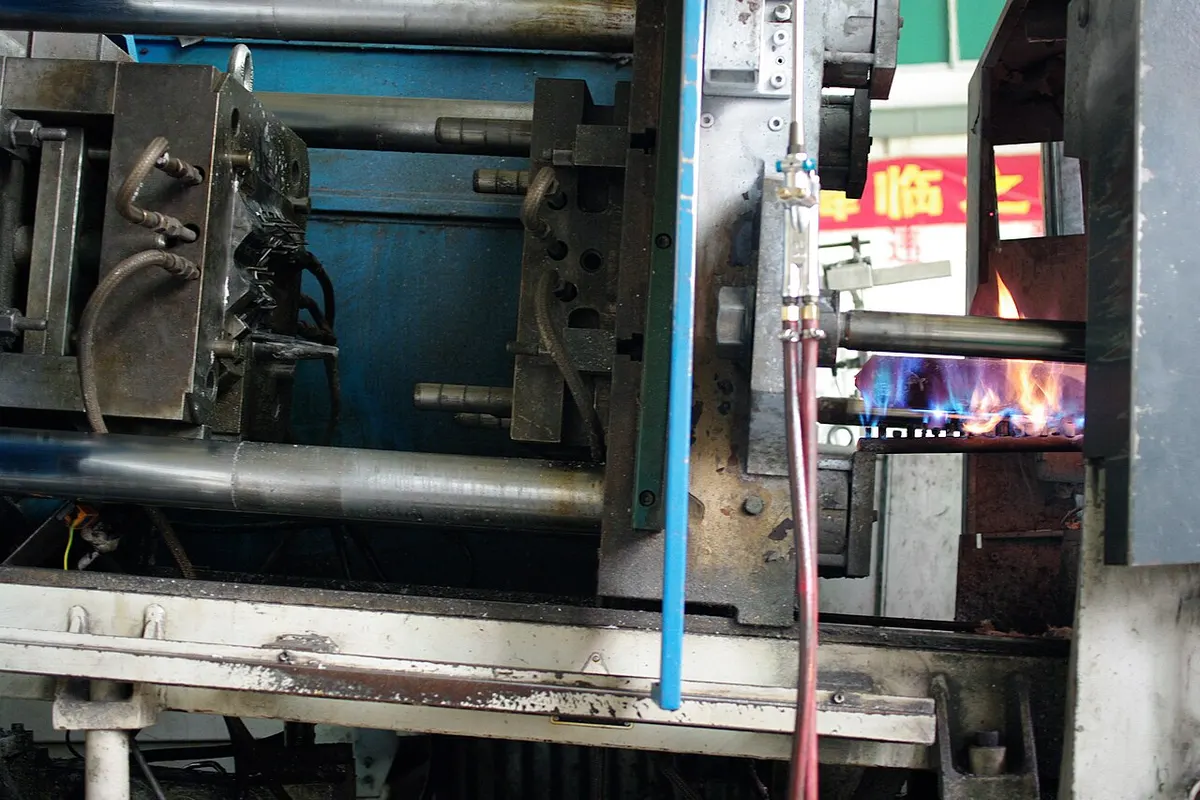
A die cast aluminum chassis beats a CNC machined one only when a run is long enough to pay back the die. The break-even is the tooling cost divided by what each cast part saves, and for a cosmetic audio chassis the saving is smaller than it looks, because the visible faces are machined and finished anyway. Below a few hundred pieces CNC wins on cost and speed. Between a few hundred and a few thousand it depends on the part. Above that, quote both.
No public survey of die cast tooling for audio gear exists, so the numbers below come from a casting reference and one supplier’s published example. Treat them as directional and get quotes on your own drawing. Related reading: billet, extrusion or sheet for an audio chassis and amplifier chassis cost, line by line. Casting is one of the routes in our guide to custom amplifier chassis.
What the die changes
CNC machining needs no tooling beyond fixtures, so the first part and the thousandth part cost close to the same machine time. Die casting flips this. Wikipedia’s die casting article calls the high capital cost the main disadvantage, since the dies are expensive and drive high start-up costs. Per-part cost then falls once the die exists.
Two published data points:
- Tooling. One UK supplier’s page shows £4,992 of tooling for an aluminium part of 200 × 145 × 45 mm, with the unit price at £6.91 for 500 units and £5.18 for 5,000. Other published guides quote much higher figures for larger or more complex tools, and they vary widely.
- Machine time for the alternative. The same supplier’s simulated CNC prices for a large 3-axis aluminium part of 170 × 210 × 150 mm run from £1,209.60 for one to £662.40 for 1,000. Its simulations show CNC unit price flattening: down 32% at 10 pieces, 43% at 100 and 45% at 1,000. CNC does not keep getting cheaper, so the cast saving does not erode as volume grows.
These parts differ in size and shape and are not a like-for-like pair. They show the structure, not your price.
The break-even arithmetic
Break-even quantity = tooling cost ÷ (CNC price per part − cast price per part, including every secondary operation).
| Tooling | Saving 10 per part | Saving 25 per part | Saving 50 per part |
|---|---|---|---|
| 5,000 | 500 pieces | 200 pieces | 100 pieces |
| 15,000 | 1,500 pieces | 600 pieces | 300 pieces |
| 40,000 | 4,000 pieces | 1,600 pieces | 800 pieces |
This is arithmetic with assumed figures in any one currency, not quotes. The point is the sensitivity: a small saving per part pushes break-even into the thousands. The casting reference adds that the process can be economical for as few as 2,000 parts if it removes extensive secondary machining and finishing. The word “if” carries the argument for audio work, since a cosmetic chassis keeps most of that machining.
What a cast chassis gives up
Tolerance. The reference gives 0.1 mm for the first 2.5 cm plus 0.02 mm per additional centimetre. On a 200 mm width that is 0.1 + 0.35 = 0.45 mm. Panel gaps and knob alignment need better, see panel gaps and tolerance stacks. Mating faces and the front panel get machined.
Surface. Surface roughness is Ra 1 to 2.5 microns, so a cast face reads as a textured surface. A brushed or bead-blasted look needs the casting skin removed, see surface roughness on cosmetic faces.
Porosity. Standard die casting leaves some porosity, including in the centre of the casting. Pores can open up when a face is machined or a pocket is cut. Vacuum-assisted and pore-free processes reduce this, at higher cost.
Anodize. This is the one that surprises audio brands. Finishers report that high-silicon casting alloys such as 380 anodize to a dull grey at best and blotchy at worst, and one finisher says a uniform black is not realistic on a casting alloy. Another forum answer notes silicon-rich areas, often the unmachined outer skin, turn dark and blotchy. These are finishers’ forum reports, so treat them as directional, but they agree. See anodizing colour match for hi-fi parts for what a wrought alloy gives you, and powder coating an audio chassis for when a coating beats anodize.
Design limits. From the same reference: minimum section for aluminium is 0.89 mm, draft is 1:100, and the thickest section should ideally be under 13 mm. A thick front panel does not suit the process, see machining thick aluminum front panels.
Zinc, magnesium and other alloys
Aluminum is the usual choice for a chassis, but the casting reference lists other alloys with different limits. Zinc allows a thinner minimum section of 0.63 mm and a draft of 1:200, and it has the longest die life, 1,000,000 cycles. Magnesium has a minimum section of 1.27 mm and a die life of 100,000 cycles, the same as aluminum. Zinc is denser, so a zinc chassis is heavier than an aluminum one of the same shape, a point that matters on a product carried or shipped.
The finishing questions follow the alloy. Ask the caster which alloy it proposes and run the finish test on that alloy, not on a wrought sample.
Where die casting makes sense in audio
- Small enclosures in volume. A standard cast box is the cheap starting point for pedals, as in guitar pedal enclosure manufacturing. The blank is made in volume by someone else, so you pay no die.
- Hidden structural parts. Brackets, internal frames and rear housings where finish is painted or coated.
- A cast body with a machined face. The body carries the volume saving. A billet front panel carries the cosmetics. It costs two parts and an assembly step.
Machined chassis stay right for the cosmetic front, any run in the low hundreds and any design that is still changing, since a die change is a cost and a CNC program change is not.
Questions for the caster
- Who owns the die, where is it stored and who pays for repair or replacement
- A guaranteed shot count, since the reference lists maximum die life of about 100,000 cycles for aluminium and 1,000,000 for zinc
- Tooling lead time stated separately from production lead time. The supplier example above lists 32 days for production and gives no separate tooling figure
- Alloy and silicon content, and whether an anodize test on a real casting batch is possible
- Which faces are machined after casting and how the datum is held
- The unit price at your volume with gates, flash and secondary operations included
For protecting the tool design when it sits at an overseas caster see protecting your drawings when sourcing parts overseas.
What to put in the RFQ
- Quote the same chassis three ways: CNC from billet, die cast with machined faces and extrusion plus machining
- Annual volume and run size, see MOQ and lead time
- Which faces are cosmetic and the finish on each, see specifying cosmetic faces on a drawing
- Tolerances that matter, so the shop does not machine more than needed
- Tooling ownership and amortisation terms if cast
- A finished first article with the real coating
Send the drawing through the RFQ form and we match it with up to 3 shops that machine or arrange casting for audio parts, with a reply within 24 business hours.
Sources
- Die casting, Wikipedia
- How much does aluminium die casting cost, Get It Made
- How much does CNC machining cost, Get It Made (simulated prices, directional)
- Anodizing die cast alloys, finishing.com forum
- Impact of anodizing on die cast parts, Xometry Pro Q&A
Frequently asked questions
At what volume does die casting become cheaper than CNC for an audio chassis?
When the tooling cost divided by the saving per part is smaller than your run. A die costing 15,000 and saving 25 per part breaks even at 600 pieces. One reference says die casting can pay at as few as 2,000 parts when it removes extensive secondary machining. No public survey exists, so quote both routes on your drawing.
Can a die cast aluminum chassis be anodized for a cosmetic finish?
Poorly, in the common alloys. Finishers report that high-silicon die casting alloys such as 380 anodize to a dull grey at best and a blotchy surface at worst, and that a uniform black is not realistic. Machine the visible faces to remove the cast skin, test a sample from the real casting batch, or choose powder coat instead.
How accurate is a die cast part compared with a machined one?
A reference gives die casting dimensional accuracy of 0.1 mm for the first 2.5 cm plus 0.02 mm per additional centimetre, and surface roughness of Ra 1 to 2.5 microns. On a 200 mm width that formula gives 0.45 mm. Faces that mate or show are machined after casting, which adds cost back.
How many parts does a die cast tool make?
The same reference lists maximum die life of about 100,000 cycles for aluminium and 1,000,000 for zinc, with magnesium at 100,000 and brass at 10,000. Real life depends on part shape, metal temperature and cycle time. Ask the caster for a guaranteed shot count and who pays for repair.
Need a quote for this part?
Send the drawing. We match you with up to 3 shops and reply within 24 business hours.
Get matched with an audio parts shop