Guides / For Shops
Your First Export Order of Cosmetic Audio Parts, Step by Step
November 21, 2026
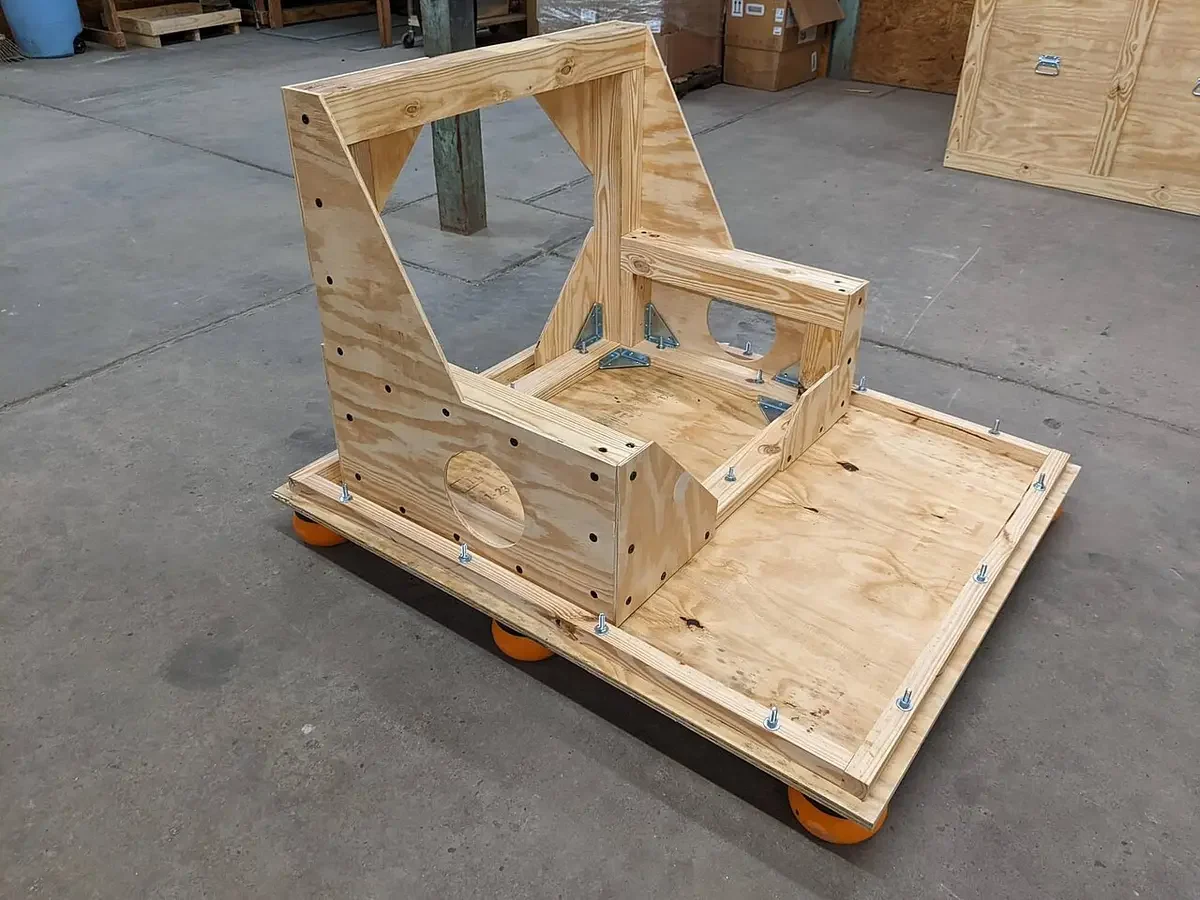
A first export order of cosmetic audio parts goes in nine steps: questions before the quote, the quote with a named Incoterm, a finish sample, written approval, production, packing, export paperwork, dispatch and a follow-up. The parts are the part of the job you already know. Most first orders go wrong in the other steps: an unclear delivery term, a sample nobody signed, a commercial invoice that does not match the packing list, or a crate that fails at the border.
This guide is for the owner or export sales engineer of a shop that machines and finishes aluminum audio parts and has not yet shipped to an overseas brand. It uses the United States as the worked example for paperwork, because a large share of audio brands buy there. Other destinations differ, so the habit to copy is the one trade.gov recommends: ask the buyer at the start which documents the destination country will need.
The nine steps at a glance
| Step | What you send or do | What the brand checks |
|---|---|---|
| 1. Questions | Five questions back on the enquiry | That you read the drawing |
| 2. Quote | Price, lead time, Incoterm, finish reference | That terms are clear |
| 3. Sample | Finished sample under agreed light | Color, edge, flatness, fit |
| 4. Approval | Written sign-off on the sample | Nothing: they sign |
| 5. Production | Updates at set points | That batch matches sample |
| 6. Packing | Individually protected parts, export crate or carton | That parts arrive unmarked |
| 7. Paperwork | Commercial invoice, packing list | That documents match the goods |
| 8. Dispatch | Tracking number, photos of the packed goods | That the parcel is moving |
| 9. Follow-up | Message after delivery | That you care about the result |
Step 1: Five questions before you quote
A foreign brand compares you with shops in its own time zone, so the first reply decides whether you get a second one. Reply within one business day with the quote or with questions. These five usually remove the need for a second round:
- Which finish, and is there a reference part in hand? Color shifts with alloy and batch, so say that you need to see the reference. See anodizing colour matching for hi-fi parts.
- Which faces are cosmetic, and how will the part be viewed?
- How many pieces now and per year? A repeat program changes how you price setup.
- Where does it ship, and who clears import: the brand or its broker?
- When is the sample needed, and when is the launch date?
If the enquiry arrives without a drawing or any finish detail, it may not be worth a quote yet. Which audio RFQs are worth quoting covers how to decide, and quoting cosmetic machining work without losing money covers what goes into the number.
Step 2: Put an Incoterm on the quote
An Incoterm tells the buyer where your job ends. The International Chamber of Commerce publishes the rules, and the current edition, Incoterms 2020, has eleven. Four matter for a first order of machined parts:
| Term | Export clearance | Where risk passes to the buyer |
|---|---|---|
| EXW (Ex Works) | Buyer | At your premises, when the buyer’s carrier takes over |
| FCA (Free Carrier) | You (goods delivered cleared for export) | At the named place, when handed to the buyer’s carrier |
| DAP (Delivered At Place) | You | At the named destination, goods ready for unloading |
| DDP (Delivered Duty Paid) | You, and import clearance and duties | At the named destination, goods ready for unloading |
All four can be used with any mode of transport. The practical reading for a small shop:
- EXW is the lightest for you, but it leaves export clearance to a foreign brand that usually cannot arrange it from abroad. Expect a forwarder to ask you for documents anyway.
- FCA keeps export clearance with you and ends your risk when the buyer’s carrier collects. It is a clean choice when the brand has a forwarder.
- DAP and DDP keep the goods and the risk with you for the whole trip. DDP also means import clearance and duty in the buyer’s country. A first order rarely justifies that exposure.
Whatever you choose, write the term with the named place on the quote, for example “FCA, your city, Incoterms 2020”. For the brand’s side of landed cost, see tariffs and landed cost on imported audio parts, which explains why brands ask for EXW or FOB first.
Steps 3 and 4: The finish sample and the signature
For cosmetic parts, the sample is the contract. Agree in writing before you make it:
- the finish and the reference it is judged against
- the viewing light and distance (see cosmetic inspection lighting and viewing distance)
- who pays for the sample and whether the cost is credited to the order
- what happens if the sample is rejected
Make one more sample than you ship and keep it, labeled and dated. That is your side of a golden sample. Do not start the batch until the brand has approved the sample in writing. An email saying “approved” with the part number is enough; a spoken “looks good” is not.
A sample is also a shipment. The United States suspended duty-free treatment of low-value shipments from all countries on 29 August 2025, and CBP’s message says most such shipments now need a formal or informal entry with duties paid. That message does not mention samples, and rules have kept changing since. Tell the brand’s broker early that a sample is coming, and put the true value on the invoice.
Step 5: Production without surprises
Agree two or three update points before you start: material received, finishing started, finishing inspected. A short photo set at each point costs you little and removes most of the “where is my order” emails. Product photos for client approval shows what the brand wants to see in them.
Need a quote for this part? Get a quote for your audio parts
Step 6: Packing for a long trip
An export parcel is handled more times than a domestic one. Pack every cosmetic part individually, with nothing touching the finish, and follow the rules in packing finished audio parts so they arrive perfect.
If you ship on pallets or in a wooden crate, check the wood. The US Department of Agriculture’s APHIS states that regulated wood packaging material entering the United States must be treated and certified under ISPM 15, and that a stamp which is illegible or does not comply is a sign of non-compliant packaging. APHIS lists plywood and similar panel products as not subject to its regulation. For a first order, cartons on a plastic or compliant pallet remove the question.
Step 7: The paperwork
Start from the list the buyer or forwarder gives you. trade.gov lists the common export documents: pro forma invoice, commercial invoice, packing list, certificate of origin, air waybill or bill of lading, and for some goods an export filing or license. For machined aluminum audio parts, the first two are the core.
Commercial invoice. For US import, 19 CFR 141.86 sets out what the invoice must show. In short:
- seller, buyer and shipper, with date and place of sale
- for each item, a description with trade name, grade or quality, and your part numbers
- quantities and the price per item in the currency paid
- freight, insurance, packing and other charges, itemized
- country of origin
- the invoice in English, or with an accurate English translation
Another rule, 19 CFR 142.6, asks for the eight digit tariff subheading. The HS code itself is a 6 digit international code kept by the World Customs Organization; countries add digits for their own tariffs. Pick the 6 digit code that describes the part, then ask the buyer’s broker for the national code. Do not guess, because the broker can correct a wrong code and you cannot.
Packing list. trade.gov describes it as the contents of each package, with the weight and measurements of each package and a detailed list of the goods inside. The invoice and the packing list must agree on quantities and part numbers. Customs officers can check the cargo against the packing list, so a mismatch means a held parcel.
Step 8 and 9: Dispatch and follow-up
On the day of dispatch, send the tracking number, the packed photos and the final invoice and packing list as PDF. When the tracking shows delivery, wait a day, then ask two things: did the parts arrive undamaged, and does anything look different from the sample? A brand that has a problem will say so while it is still easy to fix. A brand that does not will remember the question. That message is where a first order turns into a repeat customer.
If something does come back, follow a fixed routine, such as the one in cosmetic complaint handling for a machine shop.
What to do this week
Write one page for yourself: your default Incoterm and named place, your standard invoice template with the fields above, your packing list template, and a sample agreement paragraph. A shop that sends those in the first reply looks like it has exported before, even on its first order.
If you machine and finish cosmetic parts and want requests from audio brands that fit your finish route, talk to us on the supplier page.
Sources
- Incoterms 2020, International Chamber of Commerce
- Incoterms, Wikipedia
- 19 CFR 141.86, contents of invoices, Cornell Legal Information Institute
- 19 CFR 142.6, invoice requirements, Cornell Legal Information Institute
- Common export documents, trade.gov
- Packing list, trade.gov
- Wood packaging material, USDA APHIS
- CBP message CSMS 66065494, suspension of de minimis treatment
- Harmonized System, Wikipedia
Customs rules change. Check the current rules with a customs broker before you ship. Sources read in October 2026.
Frequently asked questions
Which Incoterm should a shop use for its first export order?
There is no single right answer. EXW leaves export clearance to the buyer, FCA keeps it with you and ends your risk when the goods reach the buyer's carrier, and DAP and DDP keep risk with you until arrival. Many first-time exporters of small parcels choose FCA or EXW. Agree it in writing before you quote.
What documents does a first export shipment of machined parts need?
At minimum a commercial invoice and a packing list. Ask the buyer or the freight forwarder at the start which documents the destination needs, because the list changes with the country and the product. A certificate of origin or a material certificate may be asked for as well.
Do I need an HS code on the invoice?
The HS code is a 6 digit international code, and countries add digits for their own tariff. The United States asks for an eight digit tariff subheading on entry documents. Put the 6 digit code you have chosen on the invoice and ask the buyer's broker to confirm the full national code.
Should the first order start with a sample?
For cosmetic parts, yes. Agree the finish reference, the viewing conditions and who pays for the sample before you cut it. A signed sample is the document both sides can point to when the batch is judged. Do not start the batch until the sample is approved in writing.
Need a quote for this part?
Send the drawing. We quote the finished parts, place the work with a partner shop and reply within 24 business hours.
Get a quote for your audio parts