Guides / Choosing a Supplier
Forced Labour Due Diligence for Hi-Fi Brands That Buy Aluminium Chassis and Panels
November 21, 2026
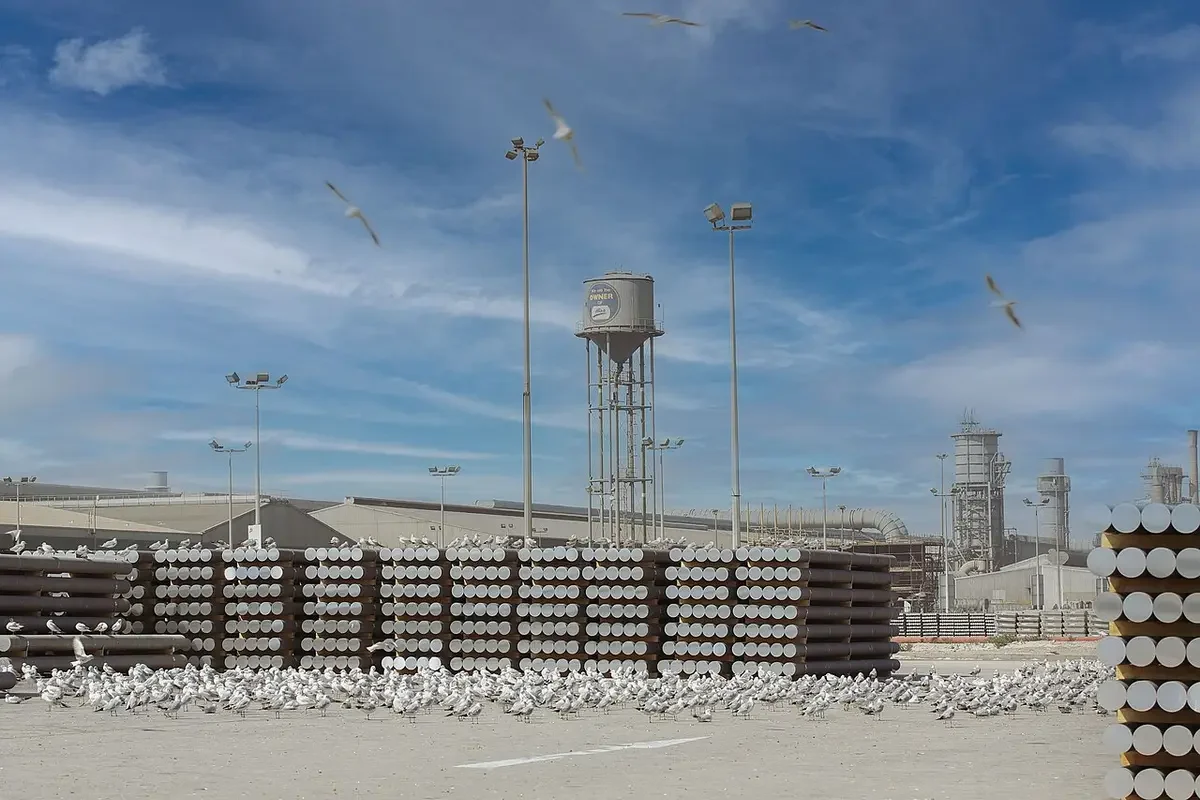
A hi-fi brand that buys aluminium chassis and panels should be able to show, for each part number, who made the aluminium, who turned it into bar, extrusion or sheet, which shop machined it and who finished it. The EU Forced Labour Regulation (EU) 2024/3015 applies from 14 December 2027 and bans products made with forced labour from the EU market. It does not ask for due diligence, but an authority that suspects a product can ask the brand to show what it did, and the brand has 30 working days to answer. In the United States the Uyghur Forced Labor Prevention Act has applied to imports since 21 June 2022, and aluminum is a named high-priority sector. This post covers what the importing brand must document. It does not say any shop is audited or approved, and it is not legal advice.
Why aluminium chassis are exposed
An amplifier front panel looks like one purchase. It is the last step of a chain.
- Bauxite is mined and refined to alumina.
- Alumina is smelted into primary aluminium and cast into ingots or billets, often with recycled metal added.
- A mill turns the billet or ingot into extrusion, plate, sheet or bar.
- A distributor may buy and resell the stock.
- A machine shop cuts the part.
- An anodizing or finishing shop finishes it.
- The brand packs and imports it.
The brand sees steps 5 to 7. The two enforcement systems look back at the earlier steps. CBP’s operational guidance for importers asks, for aluminium, for flowcharts of all manufacturing steps showing which company performs each one, details of the manufacturing process where the aluminium was made into ingots and billets and the location where it was made into extrusions, coils, wire or other products. The EU guidelines ask for supply chain maps covering tiers and sub-tiers.
The US list of high-priority sectors under the UFLPA includes aluminum. The DHS updates of 2025 name it among the previously listed sectors, and the DHS UFLPA Entity List page, read in October 2026, shows aluminium companies with 3 August 2026 effective dates. The legal trigger is still a link to the Xinjiang region or to a listed entity, but a sector listing raises scrutiny of every importer in it.
What EU law asks from 14 December 2027
The Regulation prohibits placing or making available on the Union market products made with forced labour, and exporting them (Article 3). Online offers targeted at EU buyers count (Article 4). The Commission’s guidelines, published in the Official Journal as notice C/2026/4637 on 3 September 2026, add that the rules apply to all products placed or made available from 14 December 2027, including products or components produced or imported before that date.
| Article | What it says | What it means for a brand |
|---|---|---|
| 1(3) | The Regulation creates no additional due diligence obligations | There is no required procedure, but there is a ban |
| 14(2)(c) | Authorities prioritise by, among other criteria, the share of the part suspected of forced labour in the final product | The guidelines say share can be physical, functional or economic. A front panel is a visible part of a chassis |
| 14(4) | Authorities focus on operators closest to where forced labour is likely and take size, SME status and supply chain complexity into account | A small brand sits far from the source, and authorities start closer to it, so the shop or mill may be asked first |
| 17(2) | An operator has 30 working days to respond to an information request in the preliminary phase | Records must exist before the letter arrives |
| 17(3) | The authority concludes the preliminary phase within 30 working days of receiving the replies | A decision on whether to open an investigation follows quickly |
| 18(4) | In an investigation the deadline for information is at least 30 and no more than 60 working days | Extensions can be requested with justification |
| 20(1) | The authority aims to decide or close within 9 months of starting | A product can sit in limbo for most of a year |
| 20(2) | If an operator refuses or fails to provide information, the authority may decide on other available facts | Silence is treated as a risk |
If the authority finds a violation, Article 20(4) lets it prohibit the product, order withdrawal and order disposal. The Commission leads where the suspected forced labour is outside the EU (Article 15(1)).
What the US asks now
CBP enforces a rebuttable presumption under the UFLPA that goods mined, produced or manufactured wholly or in part in Xinjiang, or by entities on the UFLPA Entity List, are barred from entry. It took effect on 21 June 2022. CBP’s June 2026 operational guidance says the importer must overcome the presumption by clear and convincing evidence, and that the detention notice gives the importer 30 days to show the goods are admissible.
The aluminium appendix to that guidance asks for these items: flowcharts of all manufacturing steps and the company doing each, certificates of origin or manufacturer affidavits naming the entity and the specific location where each material is mined, smelted and manufactured, raw material invoices, purchase orders and proof of payment, production records and export documents. The guidance says the list is not exhaustive and CBP may ask for more.
The file to build for each part number
The EU guidelines list examples of the information an authority may ask for. The table maps them to an aluminium chassis. The right-hand column names who normally holds the record.
| Record | Example for an aluminium chassis | Who holds it |
|---|---|---|
| Bill of materials | Each part number, alloy and form (bar, extrusion, sheet) | Brand |
| Supplier list with key production steps | Mill, distributor, machine shop, finishing shop, each with name, address and company identifier | Brand, from shop answers |
| Supply chain map | One page showing tiers and sub-tiers from billet to finished part | Brand |
| Traceability evidence | Mill test certificate with heat or lot number, tied to the shop’s job number | Shop |
| Transaction records | Purchase orders, invoices, packing lists, payment records, bills of lading | Brand and shop |
| Production and input-output records | Bar bought against parts shipped for the job | Shop |
| Policies | Supplier code of conduct and a forced labour clause in the purchase terms | Brand |
| Third-party audit reports | Social audits where a supplier has them | Supplier |
The guidelines also list laboratory test results, including isotopic testing, as one way to identify a product’s origin. It is an expensive tool and not a routine requirement. Most brands will not need it unless a case is opened.
For the lot records a finishing shop can show, see lot records for cosmetic finishing and the records a cosmetic shop shows at a brand audit.
Need a quote for this part? Get a quote for your audio parts
A clause to put in the RFQ and the purchase terms
State the request before the order, in the same package as the drawing. Adapt this wording with your lawyer:
Material origin. On request, and within [n] working days, the Supplier will provide for each lot:
1. the name and country of the mill and of any distributor that supplied the aluminium;
2. the mill test certificate with heat or lot number;
3. invoices and packing lists for the material;
4. the name and address of each subcontractor that machined or finished the parts;
5. a statement that the Supplier does not knowingly use forced labour, as defined in ILO Convention No 29, in its operations or in its supply of this material.
The Supplier will tell the Buyer promptly if any of this information changes.
Item 5 is a statement, not proof. The guidelines say that providing information does not guarantee that a product will escape a ban decision. They also say the information must be accurate, meaningful, relevant and complete when it is requested. A shop that cannot name its mill is a warning sign in itself.
hifimfg.com matches RFQs with shops. It does not audit shops or certify supply chains, so the evidence has to come from the shop and the brand has to read it. Put the clause in the RFQ package so every shop that quotes sees it.
Order of work for 2027
- List your aluminium parts. One row per part number: alloy, form and where it ends up. The guide to aluminium alloys for anodized audio parts helps you fill the alloy column.
- Ask for the first four records at the next quote. Mill, distributor, certificate and subcontractors.
- Add the clause to your purchase terms.
- Keep the file together. One folder per part number or per lot, so you can answer within 30 working days.
- Check the rules that sit next to this one. The audio hardware rules calendar for 2027 lists the battery, radio and product safety rules.
If you are ready to quote a chassis or panel and want shops that will answer these questions, send the drawing on the RFQ page. We read it and reply within 24 business hours.
Sources
Read in October 2026. This is not legal advice.
- Regulation (EU) 2024/3015 on prohibiting products made with forced labour on the Union market
- Commission guidelines on the application of Regulation (EU) 2024/3015, C/2026/4637
- CBP, Uyghur Forced Labor Prevention Act enforcement
- CBP, Forced Labor Enforcement Operational Guidance for Importers, June 2026
- DHS, 2025 updates to the Strategy to Prevent the Importation of Goods Mined, Produced, or Manufactured with Forced Labor in the PRC
- DHS, UFLPA Entity List
Frequently asked questions
Does the EU forced labour ban require a hi-fi brand to do due diligence?
No. Article 1(3) of Regulation (EU) 2024/3015 says it creates no additional due diligence obligations. It bans placing products made with forced labour on the EU market from 14 December 2027. The Commission's guidelines say due diligence is a useful way to show a product was not made with forced labour, but traceability, purchasing practices and certification schemes can also be effective.
How long does a brand have to answer if an authority asks?
In the preliminary phase the operator has 30 working days to answer the information request, under Article 17(2). If a formal investigation starts, the authority sets a deadline of at least 30 and no more than 60 working days under Article 18(4). An operator can ask for an extension with a justification. Missing a deadline without a valid reason lets the authority decide on the facts it has.
Does the US rule apply to a brand that sells only in the United States?
Yes, if it imports the goods. The Uyghur Forced Labor Prevention Act created a rebuttable presumption, effective 21 June 2022, that goods made wholly or in part in Xinjiang or by listed entities cannot be imported. To release detained goods the importer must show by clear and convincing evidence that they were not made with forced labour. Aluminum is a named high-priority sector.
Is a shop's ISO 9001 certificate proof of a clean supply chain?
No. ISO 9001 is a quality management standard and says nothing about where the aluminium was smelted or who worked there. Ask for mill certificates, supplier names and invoices instead. The records a brand needs are about the origin of the metal and the route it took to the shop.
Need a quote for this part?
Send the drawing. We quote the finished parts, place the work with a partner shop and reply within 24 business hours.
Get a quote for your audio parts