Guides / For Shops
CNC Knob Production Quote: Bar Feeding, Cycle Time and Finish Lots
November 14, 2026
A knob looks simple, so it gets quoted from a cycle time and a material weight. On a cosmetic run that misses three things: how much of each bar becomes parts, how much of the cycle is not cutting and how finishing is charged. This guide gives the arithmetic for each so the quote holds up when the run is on the machine. For what the buyer is asking for, see CNC volume knob manufacturing.
All numbers in the worked examples below are assumed inputs chosen to show the method. Replace them with your own timed figures.
Start with parts per bar
If the knob is turned from bar, material cost is not the weight of the finished part. It is the bar price divided by the number of parts you actually get out of it. Three losses sit between the two:
- The remnant. The stub that cannot be fed any further. One bar feeder supplier states a typical remnant of about 2 to 6 inches in short-cycle production and says it is usually treated as waste.
- The parting kerf. Sandvik Coromant’s parting guidance picks the insert width by diameter, for example 1.5 mm for diameters of 10 to 25 mm and 2.0 mm for 25 to 40 mm, and advises the narrowest insert that will do the job to save material.
- The facing allowance. The stock you take off each blank to clean the face.
A worked example with assumed inputs: 6061 bar of 30 mm diameter, 12 ft long (3,657 mm), a knob 20 mm long, a 2.0 mm parting insert, 0.5 mm of facing per part and a 152 mm (6 inch) remnant.
| Item | Value |
|---|---|
| Length used per part (20 + 0.5 + 2.0) | 22.5 mm |
| Usable bar length (3,657 - 152) | 3,505 mm |
| Parts per bar | 155 |
| Bar weight at 2.70 g/cm³ | about 7.0 kg |
| Share of the bar that ends up in parts | about 85% |
| Lost to kerf and facing | about 11% |
| Lost to the remnant | about 4% |
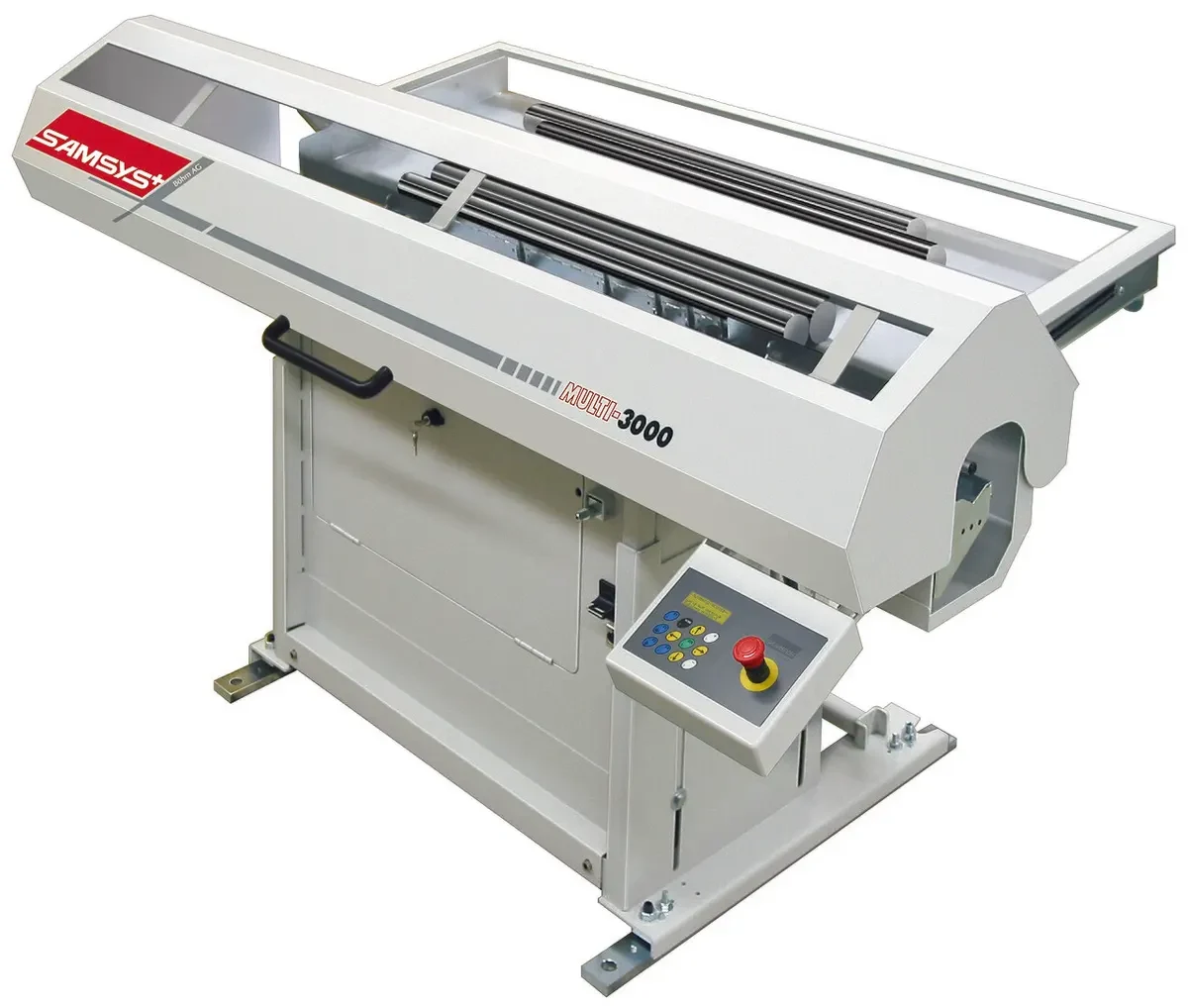
Now feed the same material through a short loader that needs 3 ft (914 mm) pieces, so each 12 ft bar is cut into four. Each piece leaves its own remnant, and the same 152 mm remnant gives 33 parts per piece, 132 per 12 ft bar. That is 23 fewer parts, about 15% less, from the same bar. A feeder supplier makes the same point: a 12 ft bar cut into four 3 ft sections produces four remnants instead of one. Your headstock decides what you can run, so this is a line to price, not a reason to buy a machine.
Two other bar feeding facts belong in the quote:
- Overfeed on pneumatic feeders. The same supplier notes that a pneumatic feeder can overfeed by about a quarter inch before it reaches the turret stop, and that stock is faced off every time. On aluminum that is small. On brass or stainless knobs it is a visible line.
- Straightness. Straightness matters more on 12 ft feeders because of the longer unsupported span, and the supplier advises specifying it with the material supplier, since grinding bars afterwards costs money and time. A bent bar means vibration marks on a cosmetic face.
The same source says one 12 ft bar at short cycle times may last about 1.5 hours and that a magazine loaded with 10 bars can run through a night shift. Treat that as vendor content, directional only. What it does tell you is that the bar feeder changes who is paid for time at the machine, so price an unattended run on parts per hour of attended time, not on spindle time alone.
Cutting time is the smaller number
The arithmetic behind cutting time is simple. Cutting speed vc is πDN/1000 for metric units, with D in mm, N in rpm and vc in m/min, the form given in the Wikipedia speeds and feeds article. Spindle speed is then N = 1000·vc/(π·D). The feed rate is the feed per revolution times N, so a straight cut of length L takes L divided by feed per revolution times N, which is the “period of engagement” Sandvik defines as machining time.
With assumed inputs of vc = 300 m/min, D = 30 mm, a feed of 0.1 mm per revolution and a 20 mm cut:
- N = 1000 × 300 / (π × 30) = about 3,183 rpm
- Time = 20 / (0.1 × 3,183) = 0.063 min = about 3.8 seconds
A few seconds of cutting per pass is not a price. The rest of the cycle is the price:
- Bar advance and stop
- Tool changes and indexing between the roughing, finishing, chamfer and parting tools
- Parting off. The diameter changes during the cut, so the spindle speed and time are not constant, and Sandvik advises cutting the feed by up to 75% about 2 mm before the centre and stopping before the centre so the part drops off.
- The pip. Parting leaves a small pip, and a front-angled insert reduces it. If the parted face is a cosmetic face, you need a second operation or a sub-spindle. Sandvik notes that with a sub-spindle the part can be pulled off before the centre.
- The second operation for the flats, set screw hole, pointer slot or knurl. See knob to shaft fit for the features buyers specify.
So time one part, with the bar feeder loading and the parting cycle included, and use that figure. Cutting-time arithmetic is for checking whether a quoted number is believable, not for building it.
Spread setup across quantity breaks
Setup does not scale with quantity. Per part minutes do. Show two or three breaks and let the buyer see the curve. With assumed inputs of 90 minutes of setup and 3.0 minutes per part (cycle, deburr and cosmetic inspection):
| Quantity | Setup per part | Total minutes per part |
|---|---|---|
| 50 | 1.80 | 4.80 |
| 200 | 0.45 | 3.45 |
| 1,000 | 0.09 | 3.09 |
The per part line barely moves after the first few hundred, so a buyer asking for 1,000 gets a lower price but not a halved one. If the knob has a sibling in the same diameter, say so in the quote, since the same bar and the same jaws can serve both. How the buyer should read this is covered in the MOQ and lead time guide.
Need a quote for this part? Get a quote for your audio parts
Price each finish lot, not each part
Finishing is charged on loads. Anodizers set minimum charges and price per piece above them, which is covered in low volume anodizing minimums. Put the finisher’s minimum into the quote as a per lot line and divide it by the lot size, not by the full order if the order will be finished in several lots.
Lots also matter for colour. A manufacturing forum thread on colour matching anodize states that anodize will differ from batch to batch and that matching depends on the process, dye type, thickness and surface preparation. One engineer there advises supplying a reference part from a previous batch and running test pieces before a large batch. A knob set that has to match across two lots is a quote line of its own:
- One finish lot per run is the base price.
- A run split over two lots carries a second minimum charge.
- A repeat order may come from a different lot, so say that in writing and keep the first approved parts as the reference, see golden and boundary samples.
- For a matched set, finish all of the knobs, including spares, in the same lot.
For the buyer’s view of colour repeat, see anodizing colour match for hi-fi parts.
Put it together
A line by line structure keeps the quote honest, and fits the approach in quoting cosmetic machining work without losing money:
| Line | Basis |
|---|---|
| Material | Bar price divided by parts per bar, remnant included |
| Machine time | Timed cycle per part times your machine rate |
| Second operation | Timed minutes per part |
| Setup | Setup minutes divided by the quantity at each break |
| Deburr and inspect | Timed minutes per part, see scratch free handling |
| Finish | The finisher’s lot price divided by the lot size |
| Scrap allowance | A percentage from your own history, applied to machining and finish |
| Pack | Minutes plus consumables per part |
If you run audio knobs and want requests that fit your bar sizes and finish route, register your shop. We send you work requests, you quote us and we place the purchase order. There is no fee to join.
Sources
- Bar feeder length and diameter guide, Absolute Machine Tools (vendor content, directional)
- Parting off, Sandvik Coromant
- General turning formulas and definitions, Sandvik Coromant
- Speeds and feeds, Wikipedia
- Can you color match anodize, Xometry engineering forum (forum opinion, directional)
Frequently asked questions
How do I price the bar remnant on a knob run?
Work out parts per bar from the usable length, then divide the bar cost by that number and add the remnant as waste. Remnants of about 2 to 6 inches are typical in short-cycle production and are usually scrap, according to one bar feeder supplier. If you cut bars into short loader lengths, you get a remnant from every piece, not one per bar.
Is cutting time the biggest part of a knob's machine time?
Often it is not. Feed distance divided by feed rate gives the cutting time, and on a small knob that can be a few seconds. Bar advance, tool changes, parting off and any second operation come on top. Time one part on the machine and use that, not the cutting-time arithmetic, in the quote.
Why quote knobs per finish lot?
Anodize colour can differ from batch to batch, and the finisher charges per load, not per part. One engineer on a manufacturing forum advises giving the anodizer a reference part from a previous batch and running test pieces first. Quote one finish lot per run and tell the buyer that a repeat order may come from a different lot.
How should I spread setup across quantity breaks?
Divide the setup minutes by the quantity and add the per part minutes. With an assumed 90 minute setup and 3 minutes per part, 50 knobs carry 4.8 minutes each and 1000 knobs carry 3.09. Show two or three breaks in the quote so the buyer sees where the price flattens out.
Need a quote for this part?
Send the drawing. We quote the finished parts, place the work with a partner shop and reply within 24 business hours.
Get a quote for your audio parts